


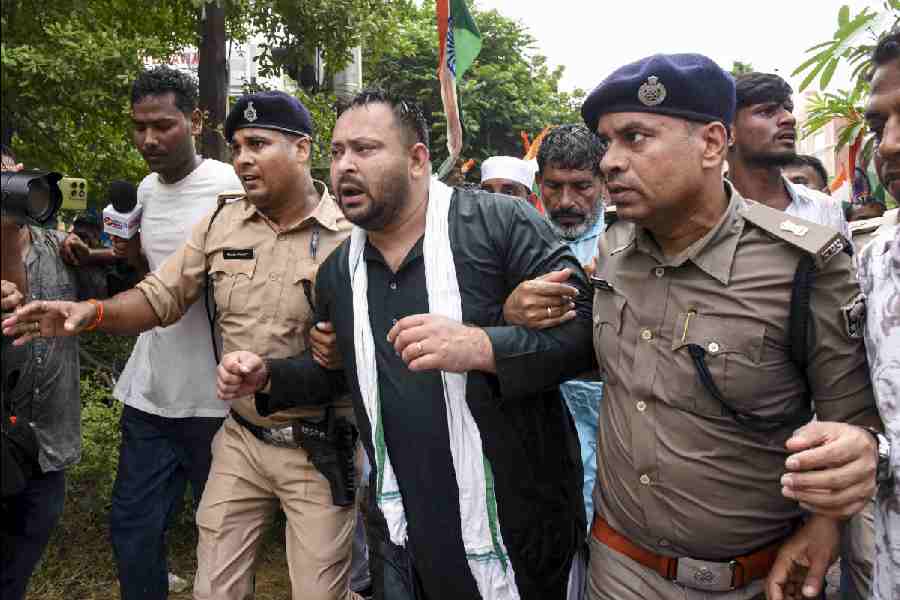
On Wednesday, Tejashwi Yadav, the Leader of Opposition in Bihar, faced detention in Patna while leading a march against recent police actions during protests related to the National Eligibility cum Entrance Test (NEET) paper leak. Patna Senior Superintendent of Police, Kartikeya K Sharma, confirmed the incident, highlighting the ongoing tensions between the Bihar government and protestors advocating for student rights.
The police detained Yadav near the Income Tax office as he expressed his dissent regarding government negligence. He stated, “The government is pushing the future of students into darkness. Exam papers are getting leaked frequently.” This march aimed to voice the frustrations of many students who have been negatively affected by leaks in exam papers, raising serious concerns over educational integrity.
Earlier in the day, Yadav led a group of RJD leaders and supporters from JP Golambar in Patna to Lok Bhavan, aiming to escalate their protests against the government’s handling of NEET and other examination issues. The atmosphere intensified when police deployed water cannons against RJD demonstrators, including Yadav, as they attempted to breach barricades along the protest route.
In a forceful accusation, Yadav emphasized the seriousness of the government’s response to peaceful protests, saying, “It is important to understand the emotions of Gen Z. The government used AK-47 rifles against the protesting students in Bihar, and pellet guns and nail-embedded batons against them in Delhi, just because they demanded an honest and transparent examination system.” This statement reflects growing discontent among the youth, especially as issues concerning academic integrity affect their futures.
The NEET paper leak scandal has sparked widespread outrage, drawing attention to the need for transparent examination processes in India. Students across Bihar have rallied for accountability and reforms to prevent such incidents from recurring. The RJD, led by Yadav, has positioned itself as a vocal opponent of the government’s current stance, signalling broader political implications in the upcoming Bihar assembly elections.
As protests continue to unfold across the state, the government faces mounting pressure to address the grievances of the students and oppositional parties. The situation highlights a critical junction in Bihar’s political landscape, with Yadav’s detention likely to galvanize further protests and possibly reshape electoral dynamics in the region.

