


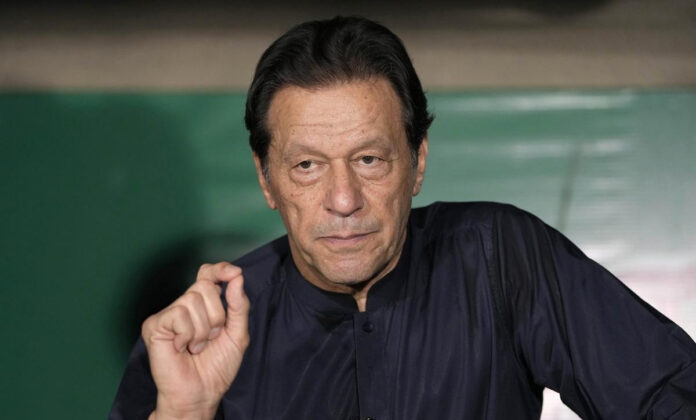
A Pakistani high court is poised to hear a significant plea from jailed former Prime Minister Imran Khan and his wife, Bushra Bibi, on Thursday, aiming to contest convictions in the Al-Qadir Trust case. This case itself has had widespread ramifications within Pakistan’s political landscape.
Last January, an Islamabad accountability court sentenced 73-year-old Khan to 14 years in prison, while Bibi received a seven-year sentence. Both face allegations of corruption related to the Al-Qadir Trust, an organization that supposedly misused funds intended for charitable purposes.
The couple challenged their convictions in the Islamabad High Court (IHC). Initially scheduled for April 22, the hearing faced postponement due to the closure of the Red Zone, a security area in Islamabad, amidst anticipated negotiations between Iran and the United States.
According to the registrar’s office, a division bench consisting of Chief Justice Sarfraz Dogar and Justice Muhammad Asif will review their case this Thursday. The Al-Qadir Trust case involves 190 million pounds linked to allegations against the couple. The trust purportedly functioned as a cover for receiving valuable land from a prominent real estate tycoon.
The National Accountability Bureau (NAB), Pakistan’s anti-corruption watchdog, claims that the transactions were aimed at facilitating Khan’s administration to utilize repatriated funds from the UK to settle the tycoon’s fines instead of allocating these resources to the national treasury. This raises critical questions about the governance and transparency of Khan’s tenure as Prime Minister.
Khan has consistently refuted the allegations, asserting that neither he nor his wife ever gained financially from the trust or its associated dealings. His defense hinges on the notion that the charges lack substantial evidence and are politically motivated, aimed at undermining his influence in Pakistani politics.
The outcome of the hearing could have profound implications for Khan, who remains a pivotal figure in Pakistan’s current political scenario. His supporters regard him as a victim of political vendetta, while opponents argue that accountability measures are essential for eradicating corruption.
As this legal battle unfolds, public interest continues to surge around the politics of accountability in Pakistan. The proceedings could reshape perceptions about corruption in high office and may potentially influence future electoral dynamics.
Observers note that the legal framework surrounding accountability in Pakistan has often encountered challenges, particularly regarding the political ramifications of such high-profile cases. Khan’s ongoing saga serves as a focal point for discussions about governance, transparency, and the rule of law in Pakistan.
The public awaits this pivotal hearing, with many eager to see how the judiciary addresses these weighty allegations against one of Pakistan’s most controversial political figures.

