


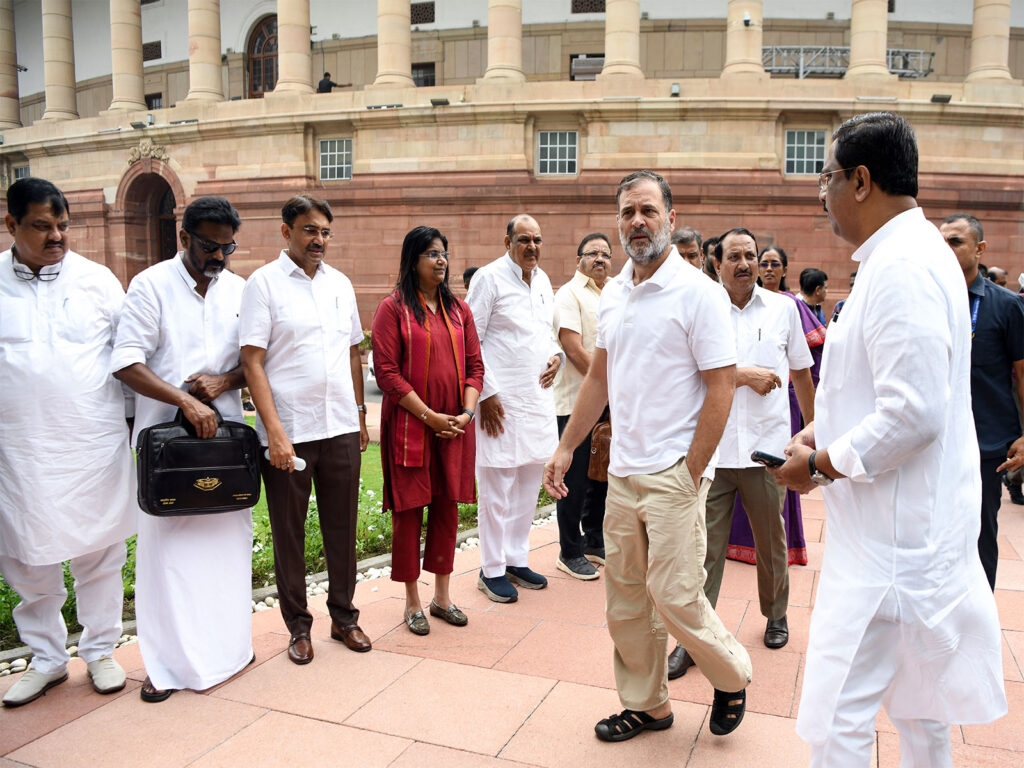
Rahul Gandhi, the Lok Sabha Leader of Opposition, accused Union Home Minister Amit Shah of avoiding Parliament during the ongoing Monsoon Session. This accusation comes amid unrest regarding the Delhi Police’s handling of students protesting for their rights.
On Wednesday, Gandhi took to X, stating, “The country’s Home Minister is hiding his face because he is guilty of wrongdoing against the students.” The comment highlights rising tensions between the opposition and the ruling party as protests escalate across various states.
The backdrop to these allegations is the sustained protests initiated by various opposition parties over the treatment of students who participated in the “Sansad Chalo” march held on July 20 at Jantar Mantar. This demonstration, organized by the Cockroach Janata Party, aimed to address pressing concerns regarding examination paper leaks and advocate for significant reforms in India’s examination system.
Protesters demand transparency and accountability in how examinations are conducted, emphasizing the impact of these issues on the academic future of many students across the nation. The manifestation of these issues has sparked wider discussions within legislative sessions, with many voices calling for immediate changes.
Opposition leaders, including Gandhi, have alleged that the police used excessive force against demonstrators during this contentious event. They argue that such actions are indicative of a broader issue concerning civil liberties and police conduct under the current government.
Gandhi’s comments have elicited strong reactions from various civil rights organizations and student bodies, who have supported the protests and criticized the government’s approach to handling dissent. They highlight the importance of dialogue and accountability in addressing these grievances.
As the Monsoon Session unfolds, many observers keep a watchful eye on Amit Shah’s responses to these allegations. The Home Ministry and Amit Shah have yet to address Gandhi’s claims as of the time of this report. Their silence on the matter raises questions about the government’s commitment to upholding democratic principles, especially in the educational domain.
In conclusion, as protests continue and political exchanges grow more intense, the handling of student concerns remains a critical issue for the government. The outcome of these events will likely shape future parliamentary discussions and influence public sentiment as the nation navigates through these turbulent times.

