


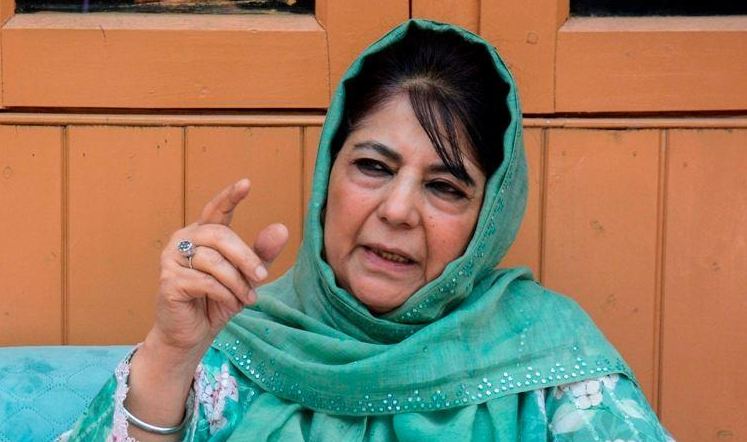
People’s Democratic Party (PDP) chief Mehbooba Mufti recently responded to Prime Minister Narendra Modi‘s video on X, addressing the challenges faced by Kashmiri youth. She firmly stated that India has two distinct Generation Zs: those flourishing with inherited opportunities and those in Kashmir encumbered by inherited curfews and trauma.
In the video, Prime Minister Modi discussed forgiving students who used profanity against him during the Jantar Mantar protest. In a pointed critique, Mufti emphasized that Kashmiri youth do not seek sympathy or charity. Instead, they demand equal opportunities to thrive.
Mufti articulated her stance in a tweet, saying, “Hon’ble PM @narendramodi, there are two Gen Zs in India. One inherited opportunity; the other, in Kashmir, inherited curfews, crackdowns, internet shutdowns, lost classrooms, unemployment and trauma. Kashmiri youth seek neither sympathy nor charity, only dignity, equal opportunity, political space and the freedom to dream without fear. If compassion is to define India’s future, let it begin with Kashmir.”
This statement underscores a crucial narrative about the stark contrasts in experiences among India’s youth. With Kashmir often in the spotlight for its conflicts, Mufti’s message calls for a deeper understanding and resolution of the systemic challenges in the region.
The PDP chief’s words have sparked discussions about the socio-political landscape in India, particularly the historical context that shapes perceptions of youth in Kashmir. Many observers have noted that while some Indian youth enjoy a plethora of opportunities, their counterparts in conflict-affected areas grapple with persistent instability and lack of resources.
Experts argue that addressing these disparities is essential for fostering national unity and progress. The plight of Kashmiri youth often gets overshadowed by political rhetoric, and voices like Mufti’s stress the need for equitable opportunities.
By directing her message at the highest level of government, Mufti aims to challenge policymakers to recognize the urgent need for inclusive development strategies that prioritize the needs of marginalized communities.
As discussions on youth engagement and empowerment continue, the contrast she outlines serves as a pivotal reminder of the diverse realities experienced by young people in India today.

