


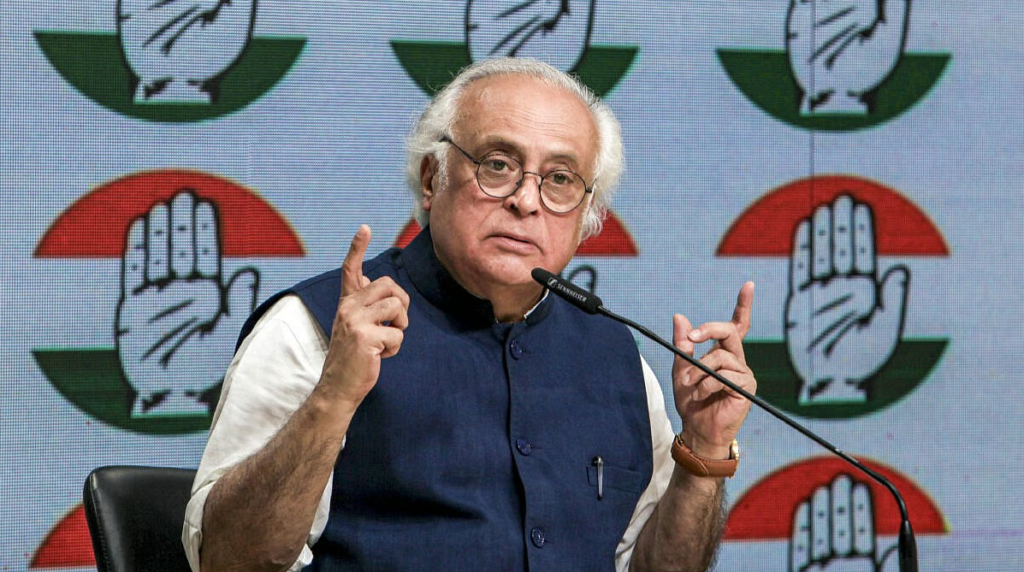
The Congress party declared its intent to resist any attempts to widen the scope of post-facto environmental clearances on Thursday. This firm resolution comes in the wake of a pivotal Supreme Court ruling that underscores the necessity of prior environmental approvals for projects.
On Wednesday, the Supreme Court invalidated a 2021 office memorandum that allowed retrospective environmental clearances. The ruling emphasized that protective environmental checks should not be circumvented through administrative orders.
Congress leader and former environment minister Jairam Ramesh underscored this sentiment, recalling a landmark Supreme Court judgment from May 2025. That ruling mandated that prior environmental clearance is a necessity, while post-facto approvals undermine essential processes like the Environmental Impact Assessment (EIA). Ramesh stated, “Such approvals compromise the principles of sustainable development and the right to a clean environment.”
The Supreme Court’s recent commentary indicates a broader legal stance on environmental protection. Ramesh criticized the Union Government’s attempt to review the May 2025 judgment by arguing that it would hinder ongoing projects worth crores initiated without proper environmental clearance.
The dissenting voice in the bench, Justice Ujjal Bhuyan, highlighted that “there is no concept of ex-post facto environmental clearance in environmental law.” He warned that such approvals disrupt established environmental jurisprudence.
Ramesh praised the Supreme Court’s decision to quash the 2021 memorandum, viewing it as a positive step. However, he raised concerns regarding the potential for the government to define ‘exceptional circumstances’ that might warrant post-facto clearances.
The Congress leader pointed out a troubling trend across various projects—from those in Great Nicobar to the Ken-Betwa project. He noted that communities resist governmental and corporate tendencies to treat environmental laws as mere formalities rather than critical guidelines.
Ramesh remarked, “I have consistently supported public campaigns opposing the erosion of India’s environmental protections over the last 17 years.” He vowed that the Congress party will unwaveringly protect the core principles of environmental law, which he argues are fundamental for the margins of society.
A unanimous verdict delivered by Chief Justice Surya Kant and Justices Joymalya Bagchi and Vipul M Pancholi clarified the prospective application of their ruling. This decision protects projects already granted retrospective environmental clearances from punitive actions.
The Supreme Court outlined that the central government retains the authority under Section 3 of the Environment (Protection) Act, 1986, to establish statutory frameworks for post-facto environmental clearances. However, such actions cannot stem solely from an administrative memorandum.
Several key projects, including the AIIMS Medical College and Hospital in Odisha and various irrigation initiatives in drought-prone areas, were mentioned as critically reliant on these approvals.
The court elaborated, “We hold the 2021 Office Memorandum to be invalid and quash it with prospective effect,” reinforcing their accountability to uphold environmental law integrity.
In a world where human development often shapes nature, the Supreme Court articulated its duty to balance the existential need for a pollution-free environment with the aspirations of development for India’s vast population. Their sentiment echoed a Gandhian philosophy that promotes meeting the needs of many without giving in to greed.

