


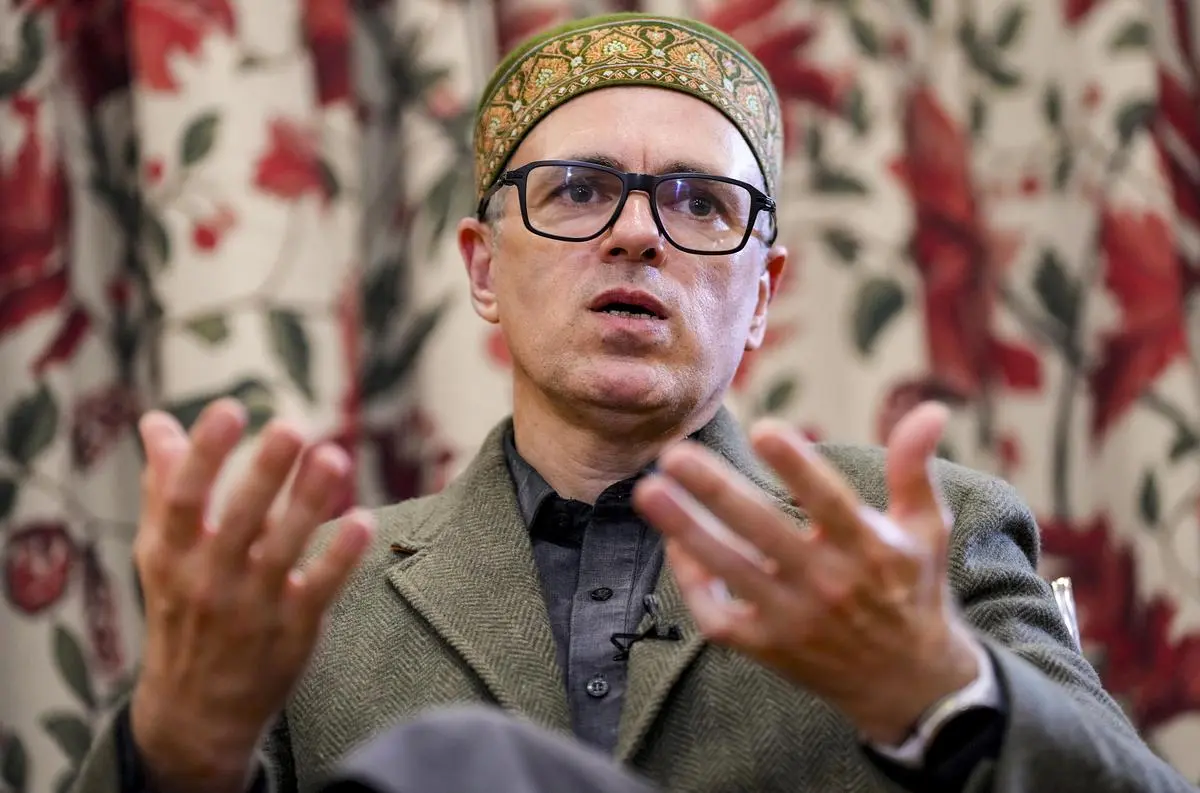
On Friday, Jammu and Kashmir Chief Minister Omar Abdullah strongly advocated for Tamilaga Vettri Kazhagam (TVK) leader Vijay to receive an opportunity to form the government in Tamil Nadu. Abdullah declared that there is no valid reason for the state’s governor to deny Vijay the chance to prove his majority in the assembly.
In recent developments, Tamil Nadu Governor Rajendra Vishwanath Arlekar dismissed TVK chief Vijay’s attempt to claim power, asserting that his party does not possess the necessary numbers to form a government. Although the Congress party, with five MLAs, expressed support for TVK, Vijay’s party still fails to reach a simple majority of 118 in the 234-member Tamil Nadu Assembly.
Omar Abdullah highlighted the lack of justification for enforcing President’s rule in Tamil Nadu, given the numerous Supreme Court judgments which stress inviting the largest party to form the government and enabling them to validate their majority on the assembly floor.
“According to the Supreme Court’s rulings, there should be no President’s rule in Tamil Nadu. There are multiple cases where the Supreme Court has affirmed that post-election, the largest party ought to be invited to form the government and should be afforded the opportunity to demonstrate their majority in the assembly,” Abdullah informed reporters.
He referenced a historical precedent, recalling that when former Prime Minister A B Vajpayee formed his government for just 13 days, the President did not hesitate to allow him to take charge without waiting for his numbers. “Once Vajpayee could not showcase his numbers, he promptly resigned,” Abdullah explained.
Omar Abdullah contended that, based on Supreme Court guidelines, the Tamil Nadu administration currently lacks any legitimate grounds to prevent this progression. “Vijay should be permitted to assume government responsibilities and prove his majority. If he succeeds, he shall continue; if not, he should step down,” Abdullah asserted, underlining the democratic process.
The issue highlights the current political climate in Tamil Nadu, as various parties navigate the complexities of governance and representation. The focus remains on the extent to which the party can rally sufficient support to secure a functioning government.

