


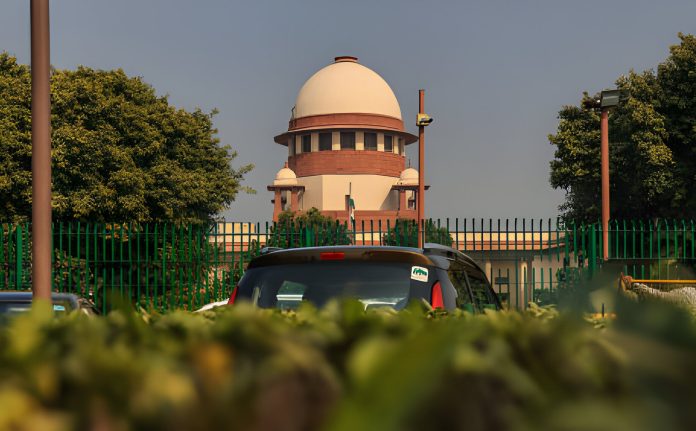
The Supreme Court of India on Wednesday referred the issue of direct anticipatory bail pleas in high courts to a three-judge bench. The bench, comprising Justices Vikram Nath and Sandeep Mehta, will address whether litigants can approach high courts directly for anticipatory bail or must seek relief from the sessions court first.
A three-judge bench’s involvement became necessary after the apex court noted significant legal implications surrounding this matter. The justices emphasized the need to assess the existing legal framework governing anticipatory bail in relation to the Bharatiya Nagarik Suraksha Sanhita (BNSS), 2023.
Previously, Senior Advocate Siddharth Luthra had been appointed as amicus curiae to assist the court in addressing fundamental issues regarding anticipatory bail applications.
On September 8, the Supreme Court raised alarms over the “regular practice” of the Kerala High Court entertaining anticipatory bail applications directly. The justices questioned the rationale behind this approach, stating, “One issue that is bothering us is that in the Kerala High Court, anticipatory bail applications are regularly entertained directly. Why is that so?”
The Supreme Court pointed out that provisions in both the old Code of Criminal Procedure and the newly introduced BNSS, 2023, establish a solid hierarchy for handling bail applications. Specifically, it cited Section 482 of the BNSS, which outlines the procedure for granting bail to individuals who anticipate arrest.
The justices observed, “It doesn’t happen in any other state. Only in the Kerala High Court… applications for anticipatory bail are regularly entertained directly.” This commentary raises questions about uniformity and fairness in judicial procedures across Indian states.
The move to involve a three-judge bench seeks to clarify legal principles surrounding a topic that has attracted considerable public attention and debate. The context for these legal dialogues arose from a plea submitted by two individuals challenging the Kerala High Court’s order denying them anticipatory bail after they approached the court directly without first seeking relief from the sessions court.
The Supreme Court noted the concerns regarding the lack of comprehensive factual records that sessions courts typically review before granting anticipatory bail. The justices expressed, “We are inclined to consider whether the option to approach the high court is a matter of choice for the accused or whether it should be mandatory to first go to the sessions court.”
The top court further issued a notice to the Kerala High Court via its Registrar General, demanding a response on the issues raised. This development signifies a pivotal moment in the judiciary’s examination of anticipatory bail procedures.
As deliberations continue, legal experts anticipate that the Supreme Court’s decision will impact bail practices across India. Stakeholders in the legal community remain hopeful that clarity regarding anticipatory bail procedures will prevent inconsistencies and safeguard the rights of individuals facing apprehensions of arrest.

