


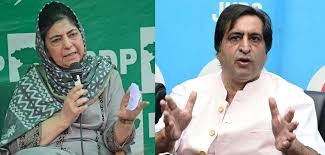
Mehbooba Mufti and Sajjad Lone Under House Arrest Claims
Peoples’ Democratic Party (PDP) chief Mehbooba Mufti and Sajjad Lone, president of the Peoples Conference, have made serious claims of being placed under house arrest. This shocking news broke on Thursday, with Mufti stating that officials are restricting her movement to prevent visits to Sopore.
The claims arise after the death of former Hurriyat Conference chairman Abdul Gani Bhat, who passed away on Wednesday evening after a prolonged illness. Both leaders assert that the government’s actions reveal the harsh truth of undemocratic practices in Jammu and Kashmir.
Why Were They Restricted?
Mufti expressed her frustrations on social media, stating, “The decision to place the political leadership under house arrest today, simply to stop us from visiting Sopore… lays bare the harsh and undemocratic reality in Jammu and Kashmir.”
Her comments shed light on the growing unrest among political leaders who believe such actions are intended to stifle dissent and prevent them from conveying their condolences.
Public Anger and Political Fallout
The recent political climate is fraught with tension, particularly following an incident at the Hazratbal Shrine. Mufti referred to the spontaneous public anger that erupted as a significant response to broader issues, claiming it sends a “loud, unmistakable message from a people pushed to the edge.”
This incident was ignited by the vandalism of a plaque at the shrine in September, which led to political outcry over hurting religious sentiments. Mufti stated that the BJP (Bharatiya Janata Party) is wilfully ignoring the deep-seated pain that has been festering among the people of Jammu and Kashmir.
Concerns Over BJP’s Approach to Kashmir
As political unrest escalates, Mufti criticized the BJP’s desire for stability in the region. She lamented, “It is becoming increasingly clear that the BJP has no interest in peace or healing in Kashmir.” According to her, the party seems dedicated to keeping the area in turmoil for its own political gain.
“This cynical approach is not just irresponsible; it is dangerous and utterly reprehensible,” she added, as emotions run high among various political factions.
Alongside Mufti, Sajad Lone also reported being detained from making the journey to Sopore. He stated, “I have been put under house arrest in order to prevent me from visiting Botingoo, the ancestral village of Professor Ghani sahib. A final goodbye is something which we all deserved.”
These leaders continue to emphasize the importance of mourning and paying respects, asserting that the people of Jammu and Kashmir have the right to express their grief publicly.
The Broader Implications of House Arrests
The situation reveals a troubling trend in the political landscape of Jammu and Kashmir. **The implications of house arrests resonate beyond the individual cases of Mufti and Lone, as they reflect a broader climate of fear** and oppression in the region.
Political analysts suggest that such detentions could lead to increased dissatisfaction among the populace and could further exacerbate the already strained relations between governing bodies and citizens.
Conclusion: A Call for Change in Jammu and Kashmir
The ongoing civil unrest and allegations of undemocratic practices are concerning for the future of Jammu and Kashmir. Mufti and Lone’s claims underline a pressing need for dialogue and action.
Ensuring the voices of local leaders and citizens are heard is crucial for healing and stability in the area. As political leaders continue to challenge the legitimacy of their confinement, the world watches with bated breath to see if there will be any movement towards peace.

