


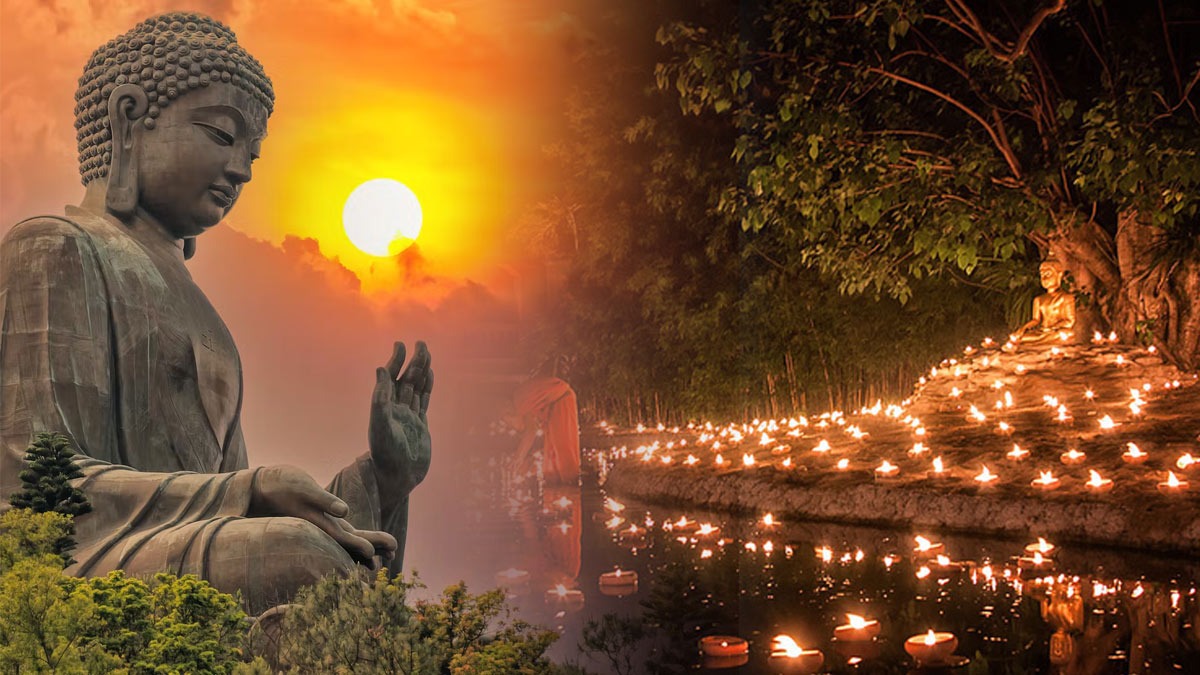
Buddha Purnima, also known as Vesak, is a sacred day commemorating the birth, enlightenment, and death of Gautama Buddha, the founder of Buddhism. Celebrated with reverence and devotion, this day is not only a religious festival but also a moment to reflect on the profound teachings of the Buddha, which have transcended centuries and cultures to offer timeless wisdom on the human condition.
The significance of Buddha Purnima lies in its threefold commemoration. Siddhartha Gautama, who would later become the Buddha, was born in Lumbini, in present-day Nepal, on a full moon day in 623 BCE. According to Buddhist tradition, it was also on a full moon day when he attained enlightenment under the Bodhi tree in Bodh Gaya, India, and finally, when he passed away in Kushinagar. These pivotal events in the Buddha’s life are celebrated simultaneously, symbolizing the full circle of his spiritual journey and the essence of his teachings.
Buddha’s teachings emphasize the path to enlightenment through ethical living, mental discipline, and wisdom. The Four Noble Truths and the Noble Eightfold Path are central doctrines that guide followers towards overcoming suffering and attaining a state of Nirvana, a transcendent state free from the cycle of birth and rebirth. On Buddha Purnima, these teachings are reflected upon deeply, encouraging individuals to cultivate compassion, mindfulness, and moral integrity in their lives.
The celebrations of Buddha Purnima are marked by various rituals and practices. Devotees visit temples and monasteries, offering prayers, flowers, and candles to statues of the Buddha. The day typically begins with hoisting the Buddhist flag and singing hymns in praise of the Triple Gem: the Buddha, the Dharma (his teachings), and the Sangha (his disciples). Meditation sessions and Dhamma talks are organized to deepen understanding of the Buddha’s teachings. In many communities, acts of charity and kindness are performed, such as feeding the poor, donating to charities, and releasing birds and animals as a symbol of liberation.
One of the most beautiful aspects of Buddha Purnima is its emphasis on compassion and non-violence. The Buddha’s message of peace and understanding transcends religious boundaries and has universal relevance. In today’s world, marked by conflict and division, the Buddha’s teachings offer a path to reconciliation and harmony. His emphasis on right speech, right action, and right livelihood provides a moral framework that is as applicable today as it was over two millennia ago.
Moreover, Buddha Purnima is an opportunity for Buddhists and non-Buddhists alike to reflect on their own lives and the impact of their actions on others. The principles of mindfulness and introspection encourage individuals to look inward, fostering personal growth and a deeper connection to the world around them. By promoting values such as empathy, patience, and selflessness, the celebration of Buddha Purnima contributes to the cultivation of a more compassionate and equitable society.
In essence, Buddha Purnima is not just a day of ritualistic observance but a powerful reminder of the Buddha’s enduring legacy. It calls upon individuals to embrace the principles of wisdom, ethical conduct, and mental discipline in their daily lives. As the world commemorates this sacred day, the teachings of the Buddha continue to illuminate the path towards a more enlightened and harmonious existence.

