


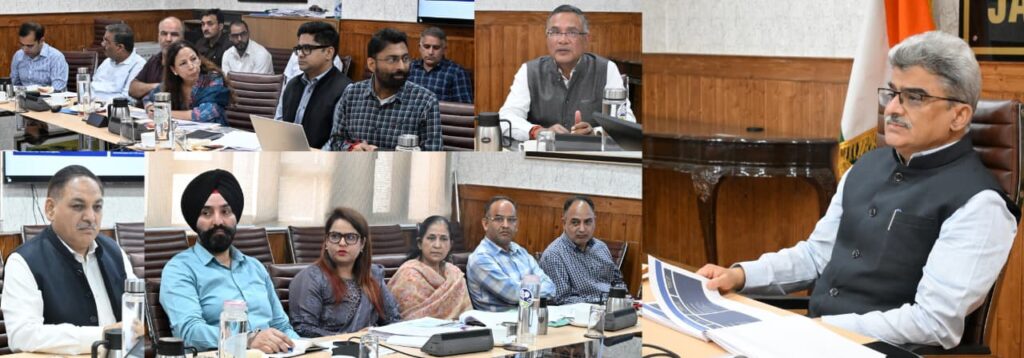
Chief Secretary Atal Dulloo announced on Thursday that the Pradhan Mantri Skilling and Employability Transformation through Upgraded ITIs (PM-SETU) initiative will revolutionize Jammu and Kashmir’s Industrial Training Institutes (ITIs). The scheme aims to invest an estimated ₹482 crore over five years to provide high-demand skills for the youth, enabling them to secure quality employment and pursue entrepreneurial ventures.
Dulloo’s remarks came during the first Union Territory-level Steering Committee meeting for PM-SETU in Jammu and Kashmir. This meeting saw the participation of key officials, including the Additional Chief Secretary for Finance, Commissioner Secretary for Education, and Secretary of the Skill Development Department, alongside representatives from industrial bodies.
The Chief Secretary praised PM-SETU as a robust framework for enhancing skill education. He highlighted that the transformation of ITIs must focus on more than just physical infrastructure. It should aim for an industry-aligned ecosystem fostering skills among J&K’s youth that lead to lucrative job opportunities.
He urged industry partners involved with the PM-SETU initiative to contribute not only funds but also vital resources such as technological expertise, modern training methodologies, and pathways for employment. Collaboration between government, industries, and training institutions is crucial to develop courses and training programs that meet emerging market demands.
Kumar Rajeev Ranjan, Secretary of the Skill Development Department, provided a comprehensive overview of the project’s framework, financing details, and implementation strategy. He noted that the PM-SETU project will channel approximately ₹482 crore into J&K over five years, with a division of ₹241 crore allocated for each hub-and-spoke cluster.
Under this initiative, ten Government ITIs will upgrade into contemporary, industry-centric institutions organized into two hub-and-spoke models. Each administrative division will have one central Hub ITI functioning as a leading technology and resource center, supporting four Spoke ITIs. This setup will grant access to cutting-edge technologies, modern training facilities, incubation programs, and capacity-building initiatives for educators. The plan aims to achieve an impressive institutional placement rate of 75 percent for graduates.
A distinctive aspect of PM-SETU is its industry-led implementation structure. Special Purpose Vehicles (SPVs) will enhance industry participation in governance, curriculum development, technology integration, and job placement within the training framework. This approach ensures that the educational offerings remain aligned with market requirements and address actual workforce needs.
Identified priority sectors for transformation include advanced manufacturing, heavy engineering, automotive, electronics, telecommunications, process industries, food processing, textiles, construction, and more. These areas hold substantial employment potential in J&K, reflecting the current job market trends.
The committee confirmed that PM-SETU follows a tripartite financial model, where 74.7% of the funding comes from the Central Government, 8.3% from the UT Government, and 17% from Anchor Industry Partners (AIPs). The projected costs culminate in approximately ₹81 crore for each Hub ITI and ₹40 crore for every Spoke ITI involved.
Companies wishing to participate in this initiative must meet specific baseline criteria, including an average annual turnover of ₹200 crore over the past three financial years, positive net worth, and a workforce of at least 500 employees.
In concluding the meeting, Dulloo emphasized that the true measure of success for PM-SETU lies in its capacity to develop a steady stream of industry-ready skilled workers while connecting J&K’s youth to improved employment opportunities and pathways into entrepreneurship. He positioned skill development as a vital pillar underpinning the Union Territory’s economic growth.

