


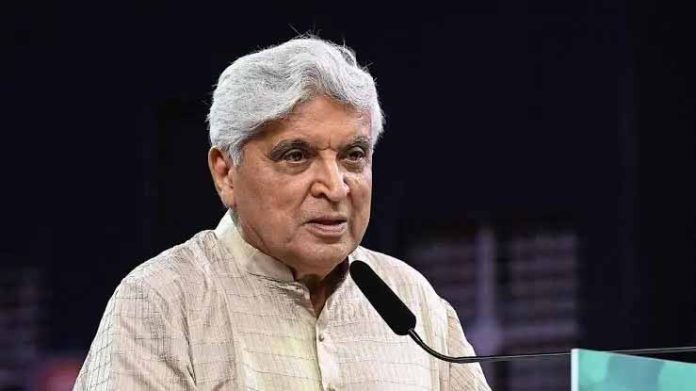
Veteran screenwriter and lyricist Javed Akhtar sharply criticized the censorship practices of India’s film regulatory bodies during the inaugural session of the Anantrang Mental Health Cultural Festival on Friday. He highlighted that films reflecting societal realities often encounter obstacles, while those filled with vulgarity slip through the regulatory process.
Akhtar asserted that audience preferences significantly shape film success. He remarked, “In this country, vulgarity will still be passed by the film boards. They don’t realise that these are wrong values—a male chauvinistic view that humiliates women. But what will not be passed is something that shows the mirror to society.”
His comments reflect a wider concern about how films mirror societal values rather than creating them. “A film is a window into society through which you peek. Closing the window will not fix what is happening outside,” Akhtar stated, urging for more responsibility from filmmakers and regulators alike.
Focusing on the nexus between hyper-masculinity in films and men’s mental health, Akhtar emphasized that such portrayals gain approval from society. He said, “It is because of the mental health of men that such films are being made. If men’s mental health improves, such films won’t be made—and even if they are, they won’t work.”
Akhtar likened the audience’s influence to a religious belief, claiming, “In show business, the audience is god. A bad audience makes a bad film successful.”
He expressed discontent over the rise of vulgar and double-meaning songs that shape contemporary cinema. Akhtar revealed his consistent refusal to participate in such work, stating, “During the 80s, many songs had double meanings, but I refused to write them. I’m not sad that people recorded them—I’m sad that those songs became superhits. That shows it’s the audience that shapes the industry.”
Referencing the controversial song ‘Choli Ke Peeche Kya Hai’, he argued that celebrations of such music by parents indicate a decline in societal values. “If these are the values of society, what can you expect from films and songs? Society is responsible—cinema is only a manifestation,” he asserted.
Despite his criticisms, Akhtar praised the recent film ‘Saiyaara’, directed by Mohit Suri and featuring newcomers Ahaan Panday and Aneet Padda. He described its music as “refreshingly calm and soulful,” noting, “The music of Saiyaara has a stillness, an old charm. Today, music has become so frantic that percussion drowns the voice.”
Moreover, when discussing the emotional impacts of music, Akhtar presented a philosophical viewpoint. “It’s not good to deny sadness; otherwise, it will resurface elsewhere,” he said, relating it to the evolving landscape of film music. “Earlier, every film had one or two sad songs, but now they’ve vanished because we believe ‘achhe din aa gaye hain’. This denial of sadness is unhealthy—accept it, cry if you must. That’s what keeps the mind healthy,” he concluded, bringing a smile to the audience.

