


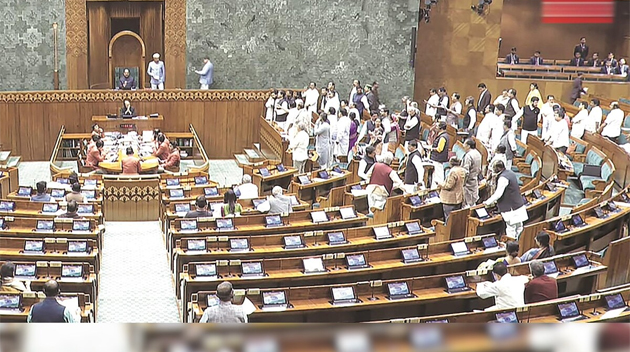
The Congress party is likely to boycott the joint parliamentary committee (JPC) set to review three controversial Bills linked to the removal of high-ranking government officials arrested for 30 consecutive days on serious charges. Party sources confirmed the decision on Monday, stating that they would formally inform Lok Sabha Speaker Om Birla soon.
Alongside the Congress, at least three other opposition parties—the Trinamool Congress, Shiv Sena (UBT), and Aam Aadmi Party—have declared they will not be participating in the panel. The Samajwadi Party has also signaled its support for a complete opposition boycott. Currently, while some political parties have not yet stated their stance, none have expressed willingness to engage with the committee.
Earlier this month, Speaker Om Birla remarked that he had not received any formal communication from political parties about a boycott regarding the JPC. In his comments to reporters, he said,
“On the issue of JPC, no political party has communicated to me in writing on this subject.”
On the last day of the Monsoon Session, Home Minister Amit Shah introduced three significant Bills in the Lok Sabha:
- The Government of Union Territories (Amendment) Bill
- The Constitution (One Hundred and Thirtieth Amendment) Bill
- The Jammu and Kashmir Reorganisation (Amendment) Bill
These proposed laws aim to facilitate the removal of the Prime Minister, Chief Ministers, and other ministers should they face arrest for 30 consecutive days on serious charges. The introduction of these Bills sparked strong protests from various opposition camps, who denounced the measures as unconstitutional and politically charged, primarily aimed at targeting opposition leaders across different states.
As it stands, the JPC tasked with reviewing these Bills has not yet been constituted. The House had referred the Bills for thorough examination, indicating that the committee would include 21 members from the Lok Sabha and 10 from the Rajya Sabha. However, without participation from key opposition parties, the future of this parliamentary panel appears uncertain.

